
You will often hear reference to UTM codes as part of a marketing analysis or Google Analytics reporting. UTM stands for “Urchin Tracking Module” and refer to simple snippets of text added to the end of a URL that tell your analytics tools (like Google Analytics or HubSpot) exactly from where a visitor is coming. While the URL itself takes the user to your page, the UTM parameters act as a digital “passport,” stamped with details about the journey.
Without UTM codes, some website visitor traffic might get lumped into vague categories like “Direct” or “Social.” By using UTM codes, it’s possible to gain the power of accurate attribution and prove which campaigns are driving revenue, which can stop the waste of money on underperforming channels and double down on what works.
One of the most common ways to use UTM codes is for email marketing campaigns, because these visits can often be lost within Direct sources and so the marketer can lose the ability to better understand the impact of some campaigns. UTM tracking can also be used for banner advertising, or links from Google Map listings, or even email signature links to a website.
The Five Pillars of Tracking
There are five key parameters you can use to drill down into your data:
- Source: This identifies the specific platform, such as Facebook, Google, or a specific partner site.
- Medium: This tracks the channel type, like “email,” “social,” or “cpc” (cost-per-click).
- Campaign: This groups all content from a single initiative, such as “Summer_Sale_2026,” so you can see its overall performance.
- Content: Perfect for A/B testing, this helps to distinguish between different links in the same ad or email (e.g., “sidebar_link” vs “footer_link”).
- Term: Primarily used for paid search, this identifies the specific keywords that triggered an ad.
Benefits of UTM Codes
Crucial aspects of being a great marketer are being able to measure your campaigns’ success and impact. This is how building UTM codes can help you do that:
- Better tracking
UTM codes allow you to track exactly where your website traffic is coming from, so you can see which marketing tactics are actually driving results. With UTM codes, you can see which sources, mediums and campaigns are bringing in the most traffic, leads, and sales. - More accurate attribution
UTM codes also allow you to give credit where credit is due. For example, if a visitor first finds your website through a Google search and then comes back later through a Facebook ad, you can see the entire customer journey and attribute the sale or conversion to both channels.
Here are the steps involved in building UTM codes in Google Analytics:
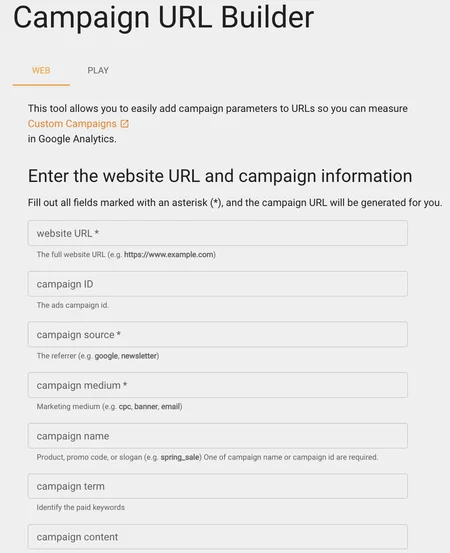
1. Open Google’s Campaign URL Builder.
2. Fill in each link attribute in the form.
Add the URL, Campaign, Source, and Medium information into their respective boxes.
To keep the data clean, the best practice is to always use consistent naming conventions. Remember, UTM codes are case-sensitive: “Social” and “social” will show up as two different categories, so it’s best to keep it simple, stay organised and let the data guide your next big marketing move.
3. Use the link in the marketing campaign.
If you’d like to shorten it, you’ll need a tool like bit.ly.
4. Measure your success.
If Google Analytics is already set up for your site, Google will automatically track incoming campaigns. You can access them in the “Traffic acquisition” report by selecting “Session campaign” as the dimension, or add a second dimension to also show source or medium.
If you want to know more about how the use of UTM codes can help to improve your business’s digital marketing, please get in touch.